
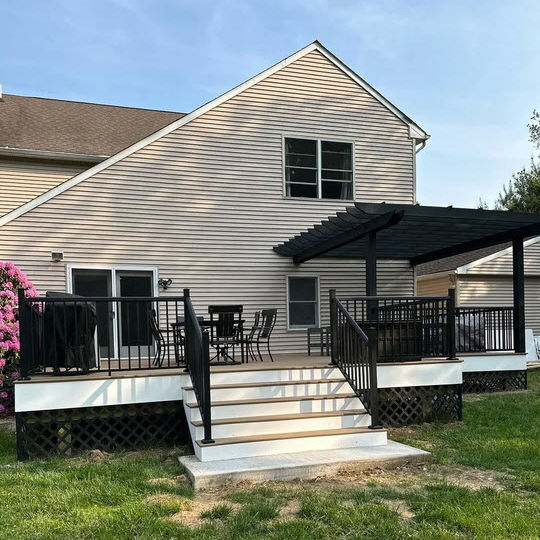
Your deck takes a beating. Sun, rain, snow, temperature swings - Central New Jersey throws it all at your outdoor living space. Most homeowners don’t think about their deck until something goes wrong. Here’s how to spot trouble before it becomes dangerous or expensive.
1. Soft or Spongy Boards
Walk your deck barefoot and pay attention. Soft spots indicate rot, which means the wood’s structural integrity is compromised.
What to do: Poke suspect areas with a screwdriver. If it sinks in easily, the board needs replacing. If rot is widespread, the whole deck may need attention.
2. Loose or Wobbly Railings
Grab your railings and give them a shake. They should feel solid and secure. Wobbly railings are a safety hazard - especially if you have kids or elderly family members.
What to do: Check the connections at the posts. Tightening hardware might solve it. If the posts themselves are rotting at the base, they need replacement.
3. Popped Nails or Screws
When fasteners start backing out, it’s a sign of wood movement - either from moisture cycling or the wood shrinking as it ages. Central NJ’s freeze-thaw cycles accelerate this problem.
What to do: For nails, replace with screws. For screws, you may need longer ones or to move to a fresh location. Widespread issues suggest the deck may need more comprehensive work.
4. Visible Cracks and Splits
Some small surface cracks are normal in wood decks. But large cracks, splits that go through the board, or checks that hold water are problems.
What to do: Small cracks can sometimes be sealed. Larger damage requires board replacement. Multiple cracked boards suggest the deck is aging out.
5. Ledger Board Problems
The ledger board is where your deck attaches to your house. This is the most critical connection - ledger failures cause deck collapses.
Warning signs:
- Gap between ledger and house
- Water stains on the basement wall below the deck
- Soft or spongy ledger board
- Corroded or missing flashing
What to do: This isn’t DIY territory. If you suspect ledger problems, get a professional assessment immediately. We’ve seen dangerous ledger situations in Millstone, East Windsor, and throughout the area.
6. Rot at Post Bases
Posts sitting directly on concrete or buried in soil are prone to rot at the base, where moisture accumulates. This is especially common in lower-lying areas of Monroe Township and Cranbury.
What to do: Check posts at ground level. If rot is present but contained to the bottom few inches, the post can sometimes be cut and set on a proper footing. Extensive rot means replacement.
7. Structural Sagging
Stand back and look at your deck from the yard. The surface should be level (or slightly sloped away from the house for drainage). Visible sagging indicates structural problems.
What to do: Sagging usually means failing joists, beams, or posts. This needs professional evaluation.
The Bottom Line
A deck in questionable condition isn’t just ugly - it’s potentially dangerous. The average wood deck lasts 15-20 years, less if it hasn’t been maintained. Many decks built in Freehold, Manalapan, and surrounding areas in the 2000s are now reaching this critical age.
Composite decks last longer but aren’t immune to structural issues - the framing underneath is still wood.
If you’re seeing multiple warning signs, it’s often more cost-effective to replace than to keep patching an aging deck.
Not sure if your deck is safe? Schedule a free inspection. We’ll tell you honestly whether it needs repair, replacement, or just some maintenance. Serving Millstone, Freehold, Monroe, East Windsor, Manalapan, and all of Central New Jersey.